
No products in the cart.
This material is from the teaching guide
for the video “ASKING for HELP“
in the 10-part DVD series You Can Choose!
HOW TO ASK FOR HELP
 Remember, it’s okay to ask for help. Don’t be embarrassed, and don’t worry about other people judging you.
 Think what might happen if you don’t get help—or if you do.
 Decide what the problem is and what help you need.
 Think about who you can ask for help. Choose someone you trust and who will know how to help you.
 Think about what you’ll say when you ask for help. Do it.
 Remember, getting help when you need it is part of being responsible—to yourself.
(If you wish to copy or use any material from this website, please click here for Terms of Use.)
DISCUSSION QUESTIONS
If you are using the video, ask the first two questions before viewing.
1. Have you ever felt embarrassed because you didn’t know something or couldn’t do something? How did it feel? What did you do about it?
 2. Why can it be hard to admit you don’t know something? What could happen?
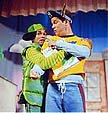
3. What is Moose’s problem?
4. How do you think Moose is feeling? Have you ever felt that way?
5. Why didn’t Moose tell Fiona and Missie that he couldn’t read? Was he being fair to them?
6. What could happen if Moose never asked for help?
This material is from the teaching guide
for the video “ASKING for HELP“
in the 10-part DVD series You Can Choose!


7. Have you seen kids try to make others feel stupid? What makes them do that?
8. Think about a time when you needed help because you didn’t know how to do something. Who did you turn to? How did you feel asking for help?
 9. If you’re having trouble with schoolwork, what can you do about it? What can happen if you don’t do anything?
10. If you need help but don’t ask for it, how can that lead to more problems?
11. What can you say or do when someone you know needs help?
12. What did you learn from this video program?
(If you wish to copy or use any material from this website, please click here for Terms of Use.)
 |
To find teaching guides on other topics for this and other grade levels |
 |
1. Have the class look for ways people treat each other in TV shows. Do they put each other down and try to make each other feel stupid? Or are they kind and helpful toward each other? In what types of shows are they kind and helpful? The children could also look for role models of helping or put-down behavior in books or stories.
2. Encourage students to ask for help by organizing a “help swap.” Those who want help write what they need on a slip of paper and place it in a shoe box or envelope. Read the slips of paper aloud occasionally, and ask volunteers to provide the needed help or suggest ways to get it.
 3. Have the class work in small groups to brainstorm different kinds of help kids can get from others. Each group focuses on a particular group of helpers such as teachers, friends, siblings, or parents. This activity could be expanded by making a classroom bulletin board or posters showing different kinds of help and potential helpers.
4. Divide the class into pairs of “helping buddies.” Each buddy has two tasks: (1) decide on some knowledge or skill he or she would like to improve and (2) work with his or her buddy to improve the knowledge or skill–or get the necessary help. The buddies meet regularly for a week or two and then report to the class on how they helped each other improve.
(If you wish to copy or use any material from this website, please click here for Terms of Use.)
Other teaching guides in this series:
 |
• Cooperation • Being Responsible • Dealing with Feelings • Saying No • Doing the Right Thing |
• Disappointment • Appreciating Yourself • Asking for Help • Being Friends • Resolving Conflicts |
 |
This material is from the teaching guide
for the video “ASKING for HELP“
in the 10-part DVD series You Can Choose!
WRITING ASSIGNMENTS
1. Write about a time when you or someone you know was really embarrassed about something. How did it turn out?
2. Divide a piece of paper lengthwise into three columns. In the first column make a list of things you do really well. In the middle column make a list of things you’d like to know or do better. In the third column list ideas about where you could go for help to improve the things in the middle column.
3. Keep a “helper’s journal.” Write about times you’ve helped other people or observed people helping each other. Share the journal with your classmates.
 4. Imagine that someone needs help but is embarrassed to ask for it. Write a short story about the person with two different endings: (1) if he or she didn’t ask for help and (2) if he or she asked for help and got it.
5. Group writing project: Get together with two or three classmates and make a list of different things kids might need help with–one to a page. Pass the pages around the group and have each group member add a new idea for getting help with that problem.
6. Write a thank-you letter to someone who helped you solve a problem, learn something, or improve a skill.
(If you wish to copy or use any material from this website, please click here for Terms of Use.)
To enlist the involvement of parents, make copies of the “For Parents” block (see below) and send them home with the children. Tell the children to discuss the video with their parents, and to perform the following activities.
1. Ask a family member or neighbor to tell you about a time when he or she felt embarrassed about not knowing or not being able to do something. What happened? How did he or she get help?
 2. Be a “secret helper” to friends or family members by helping them without talking about it. At the end of a week or two, tell them about the help you gave them. See if they can remember some things you did to help.
3. Ask a friend or family member to help you reach a goal. An example might be improving a skill or learning a new one. Make a plan together with small steps that will help you get closer to the goal every day.
Note to the teacher or group leader: It might be a good idea to think of some way for the children to share the outcomes of these activities with each other. Perhaps they could give written or oral reports or discuss their experiences in small groups.
(If you wish to copy or use any material from this website, please click here for Terms of Use.)
(Copy this block and send it home to the parents.)
FOR PARENTS
Dear Parent,
Your child is involved in learning-activities designed to develop good character, enhance self-esteem, and empower young people to make good choices for themselves. He or she may be asked to complete several tasks at home. Your cooperation with these activities will support our overall program. The current lesson is about the importance of getting help when we’re having difficulties in school or elsewhere. We have shown a video entitled Asking For Help, which presents a skit and discussion about someone who’s too embarrassed to admit he can’t read. We urge you to ask your child to tell you about this video program and what he or she learned from it.
Here are some things you can do to encourage your child to ask for help when he or she needs it. Keep in mind that many children don’t ask for help because they’re too embarrassed to admit they need it.
• Talk with your child about the importance of letting you know when he or she is having difficulty with something. Let your child know you want to help or get the right kind of help to overcome the problem.
• Make it clear that it’s normal and okay to ask for help. Let your child know about times when you needed help and how you solved problems by getting help from others. Stress the importance of taking responsibility for getting the help we need.
This material is from the teaching guide
for the video “ASKING for HELP“
in the 10-part DVD series You Can Choose!
“ASKING for HELP”
the video
the video

This video teaches children:
• That it’s important to ask for help when they are having difficulties.
• Not to let pride or embarrassment keep them from asking for help.
• That everyone needs help occasionally, and that it’s nothing to be ashamed of.
“YOU CAN CHOOSE!”
the series
the series


Start your kids on the path to positive, healthful life choices. This delightful video series teaches children valuable lessons that contribute to self-discipline, good decision-making, high self-esteem, a sense of responsibility, and the ability to get along with others. more. . .
For more information about individual videos in this series, click on the title below.
• Cooperation
• Being Responsible
• Dealing with Feelings
• Saying No
• Doing the Right Thing
• Disappointment
• Appreciating Yourself
• Asking for Help
• Being Friends
• Resolving Conflicts
If your school or organization does not have these videos, you can purchase them from Live Wire Media, or request them from your local library.
Subscribe to our almost
Monthly Newsletter
Get breaking news and developments in character education and helpful tips and ideas that you can use with your own character education program.
View the current issue.
