
No products in the cart.
This material is from the teaching guide
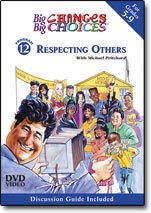
for the video “Respecting Others“
in the 12-part DVD series Big Changes, Big Choices.
HOW TO
TREAT OTHERS WITH RESPECT
Treating people with respect makes your world a nicer place to live in, whether it’s at home, at school, or out in your community. And it’s easy – all you have to do is treat people the way you like to have them treat you. Here are a few ideas.
• Don’t insult people or make fun of them.
• Listen to others when they speak.
• Value other people’s opinions.
• Be considerate of people’s likes and dislikes.
• Don’t mock or tease people.
• Don’t talk about people behind their backs.
• Be sensitive to other people’s feelings.
• Don’t pressure someone to do something he or she doesn’t want to do.
We live in a diverse nation made up of many different cultures, languages, races, and backgrounds. That kind of variety can make all our lives a lot more fun and interesting, but only if we get along with each other. And to do that we have to respect each other. In addition to the list above, here are some ways we can respect people who are different from us.
• Try to learn something from the other person.
• Never stereotype people.
• Show interest and appreciation for other people’s cultures and backgrounds.
• Don’t go along with prejudices and racist attitudes.
 |
To find additional teaching guides on Respect and related topics for K-12, click here. |
 |
DISCUSSION QUESTIONS
If you are using the video, ask the first question before viewing.
1. Agree or disagree: It’s okay to insult or make fun of people as long as they don’t hear it.
2. What are some common signs of disrespect that you see in people here at school? How do you feel about that?
3. What do you dislike most about the way people treat each other here at school? What do you like the most? Why do you feel that way?
4. Are there a lot of put-downs here at school? Are put-downs a sign of disrespect? How, in what way?
5. Is there a difference between a put-down and an insult? What’s the difference?
6. Do you have to like a person in order to be respectful, or can you be respectful to someone even if you don’t particularly care for him or her?
7. When you’re with a group of kids, what things might other people do or say that make you feel good? What things make you feel bad?
8. Do you think there is racism here at school? How is it expressed? How does that make you feel?
 9. Have you, personally, ever experienced racism or some other type of prejudice? What happened? How did it make you feel?
10. Do the kids in your school tend to stay within their own racial and ethnic groups, or do they mix. Why do you think that happens here?
11. Several of the kids in the video commented that they feel pressure to stay with their own kind rather than mixing. Do you find the same pressures here at your school?
12. Do you think people are afraid of differences sometimes? Can you give some examples? Why do you think that’s true?
13. Is it harder to respect someone who is very different from us? Why?
14. What are the benefits of having friends who are different from us?
15. Have you ever learned something new about a different culture from a friend?
16. How well do you kids know each other? What things stand in the way of getting to know people better?
This material is from the teaching guide
for the video “Respecting Others“
in the 12-part DVD series Big Changes, Big Choices.

17. What responsibilities do you feel you have toward your classmates?
18. Is it ever okay to treat another person with disrespect?
19. What are the benefits of treating people with respect?
20. The kids in this video said they think everybody is entitled to be treated with respect. Do you agree?
21. What was most meaningful to you in this video?
22. Did anybody in this video say anything you disagree with? What would you say to that person?
(If you wish to copy or use any material from this website, please click here for Terms of Use.)
Other teaching guides in this series:
1. What does it mean to treat other people with respect? Have the class brainstorm a list of do’s and don’ts for treating people with respect. Ask for specific examples of each behavior they identify. Compare their list with the one at the top of this column. Hang the list up on the wall as a reminder.
2. Have the class identify as many differences as they can among their members. This should include national, racial, and cultural differences, as well as different talents, disabilities, etc. How do they feel about all this diversity?
3. The kids in the video suggested having class discussions about different ethnic backgrounds so they can learn to understand what other people are feeling. As one boy put it, “knowledge is the basis for harmony.” Organize a multi-cultural appreciation week. Have kids representing different groups put together presentations designed to help other kids understand and appreciate the special characteristics of that group. Include such things as history, customs, values, cultures, anything that might contribute to breaking down the barriers that prevent people of different cultures from getting along.
4. Have the kids role play the following situation:
Four good friends are planning to spend a day at an amusement park. Two of them want to invite another kid who’s new in school. The other two don’t want to include this person because he/she is different in some way (different race, a “nerd,” from a foreign country, etc.). After the role play have a class discussion. Then, have four others do another role play changing what it is that’s different about the new kid (for instance, he or she is HIV positive). Repeat this process changing the difference each time.
(If you wish to copy or use any material from this website, please click here for Terms of Use.)
This material is from the teaching guide
for the video “Respecting Others“
in the 12-part DVD series Big Changes, Big Choices.
WRITING ASSIGNMENTS
1. Imagine that someday you will have a child. Write a letter of advice for that child to open when he or she reaches the age you are right now. Tell the child about the way kids in your school or other groups treated each other at this age, and how you hope he/she will treat people.
2. How is the issue of respect portrayed on television or in the movies? Watch a movie or TV show and write about how the characters interacted with each other. In what ways did they treat each other with respect or disrespect? (Give some specific examples.) Do you approve of the way they treated each other? Did you feel different toward characters who treated others with respect than those who didn’t? Which did you like better? Why?
3. Are some kids ridiculed at your school? Why? What do they get picked on about (height, weight, appearance, disability, accent, skin color, etc.)? Exactly how are they picked on? How do you think these kids feel about this? How do you feel about it? How does that kind of behavior affect the climate in your school?
4. Have you ever been made fun of for something that you couldn’t change? Can you give some examples? How did (do) you deal with it? How did it make you feel?
5. In what ways do you treat people with respect? Are there any ways in which you don’t?
6. Have you ever seen anybody mistreated for being different? Describe the incident. How did it make you feel? What would it take to prevent things like this from happening again?
“Respecting Others”
The Video
The Video
This video helps young adolescents:
• Develop an understanding of the importance of respectful behavior.
• Become aware of the many ways in which they show both respect and disrespect toward each other.
• Adopt a value for treating people respectfully.
• Learn to appreciate people’s differences rather than fear them.
• Become interested in learning more about their own roots and those of their schoolmates.
.
“Big Changes, Big Choices”
the 12-part series
the 12-part series


In Big Changes, Big Choices comedian/teen counselor Michael Pritchard helps young adolescents discover that they have the power and the responsibility to make the right choices for themselves. more. . .
For more information about individual videos in this 12-part series, click on the title below.
• The Three Rs of Growing Up
• You and Your Values
• Enhancing Self-Esteem
• Setting & Achieving Goals
• Dealing With Pressures
• Handling Emotions
• Preventing Conflicts & Violence
• Saying No to Alcohol & Other Drugs
• Speaking of Sex
• Friendship
• Getting Along With Parents
• Respecting Others
If your school or organization does not have these videos, you can purchase them from Live Wire Media, or request them from your local library.
Subscribe to our almost
Monthly Newsletter
Get breaking news and developments in character education and helpful tips and ideas that you can use with your own character education program.
